

Implants
The Body as Status, Weapon, and Debt
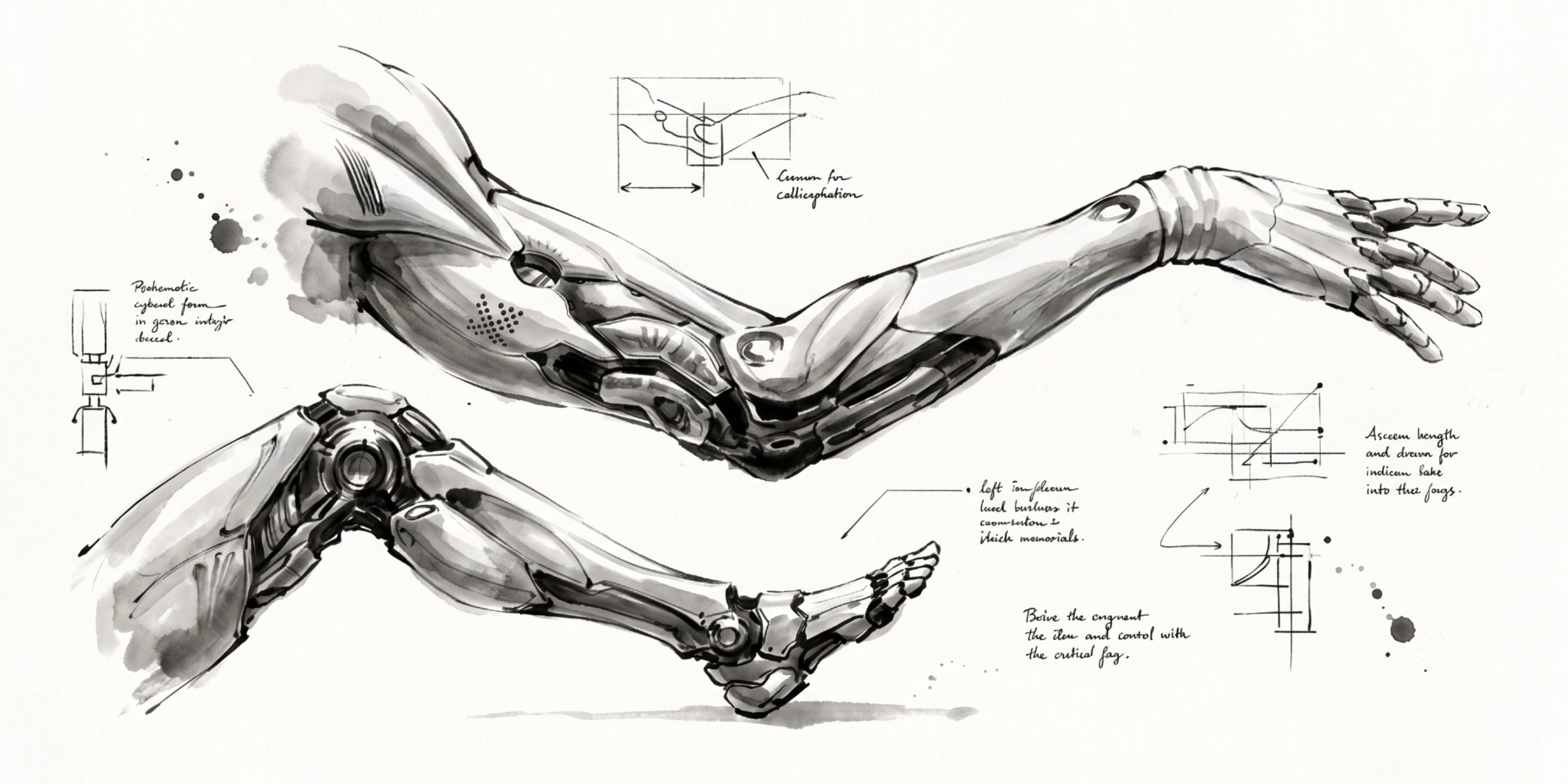
They called them cybernetic limbs, though on the street the word had already been worn down into simpler language, implants when people wanted to sound clean, chrome when they wanted to sound hungry, and metal when they wanted to remind everyone that beneath all the advertisements, financing plans, medical waivers, and polished clinic glass, the bargain was still the same old bargain between flesh and power.
In Sterling City, implants referred to any artificial body part built to replace, enhance, decorate, or outperform what a person had been born with, and that definition stretched wide enough to include a veteran’s combat arm with recoil stabilizers buried beneath its plating, a dancer’s articulated spine tuned for impossible fluidity, a joytoy’s sensory suite calibrated to another person’s appetite, an executive’s gold-plated hand resting on a boardroom table like a threat disguised as jewelry, or a rock star stepping onto a stage with synth skin polished to the same chrome shimmer as his electric guitar, both body and instrument catching the lights until the crowd could no longer tell where the music ended and the machine began.
The Body as Status
For the wealthy, implants were not always about repair, because repair implied damage, and the rich of Sterling City preferred to describe themselves as curated rather than wounded, so their modifications were framed as refinement, self-authorship, aesthetic sovereignty, and other expensive phrases that meant a person had purchased the right to make the body obey imagination instead of biology.
Synth skin became the gentlest entry point into that world, a surface miracle sold in private clinics and luxury body houses, where flesh could be overlaid, replaced, recolored, strengthened, softened, or made luminous beneath certain lighting, allowing celebrities to match their skin to a stage persona, executives to wear brushed gold across the knuckles as casually as other people wore rings, and influencers to change pigment, texture, and reflectivity with seasonal campaigns as if the body were only another product line waiting for release.
The city adored this kind of transformation because it looked voluntary, because no one wanted to admit how often desire had been manufactured before the customer ever entered the clinic, and because Sterling City had long ago learned that the easiest prison to sell was the one people mistook for self-expression.
The Body as Weapon
Outside the clinics with marble floors and soft music, implants had another life, one less fragrant and far more honest, because military-grade systems were designed not to beautify the body but to turn it into a platform for violence, a tool that could carry weight longer, strike harder, stabilize faster, recover from recoil, process threat angles, and survive impacts that would turn ordinary bone into powder.
Combat implants came with reinforced joints, shock absorbers, smart tendon arrays, grip-pressure governors, blade compartments, ammunition sync, reflex assist, and tactical ports that allowed the wearer to interface with weapons systems, armor rigs, drones, and battlefield command networks, though every feature was described in language careful enough to pass through procurement paperwork without sounding like the manufacture of a better killer.
Soldiers received them as duty, mercenaries bought them as investment, police tactical units justified them as public safety, and private security firms treated them as uniform upgrades, but the people watching from the street understood the truth more clearly than any brochure ever could, because a chrome arm did not need to announce its purpose when it could lift a man by the throat and hold him there while the cameras politely turned away.

The Body as Pleasure
Then there were the implants no clinic advertised too loudly, though everyone knew where to find them, enhancements built for intimacy, performance, sensation, stamina, responsiveness, and all the quiet insecurities that Sterling City had learned to monetize with exquisite precision.
Those implants were sold under tasteful names, neural pleasure tuning, tactile amplification, pelvic stabilization, endocrine rhythm support, partner-responsive sensory calibration, and discreet performance architecture, each phrase polished until the hunger underneath looked medical, tasteful, and almost respectable.
For some, such implants were freedom, a way to reclaim sensation after injury, illness, dysphoria, trauma, aging, or ordinary human limitation, and in those cases the technology could feel almost merciful, a bridge back into the body after the body had become strange, distant, or unreliable, but for others the same market became another form of pressure, another luminous voice whispering that desire was not enough unless optimized, that sex was not enough unless engineered, that even private tenderness had to be upgraded before it could compete with the fantasies being sold above the streets.
Sterling City never cared which story was true, because both stories paid.
The Price of Metal
The cost of implants was never only money, though money was the first wall, high enough to keep the poor looking through clinic glass while the wealthy walked inside and chose a new version of themselves from soft-lit menus.
There were maintenance contracts, nerve-mapping fees, firmware updates, rejection suppressants, sensation licenses, proprietary chargers, security patches, and quiet subscription costs hidden inside the body like rent, and a person who missed too many payments might find an implant throttled, a sensory suite degraded, a cosmetic layer locked to factory gray, or an enhancement reduced to basic function until the account returned to good standing.
This was how Sterling City turned even the resurrection of the body into debt, because the machine did not merely replace what was lost, it entered the ledger, and once the body entered the ledger, ownership became complicated in ways most people preferred not to think about while signing consent forms with shaking hands.
The rich owned their chrome, or at least believed they did, while the poor leased theirs through employers, clinics, gangs, private lenders, military service, pleasure houses, or corporate restitution programs that sounded charitable until one read the clauses about repossession, compliance, and behavioral breach.
What They Meant
Implants meant different things depending on where one stood when looking at them.
In the Trident, they meant taste, money, and the divine right to improve on nature; in Eastbay, they meant work injuries hidden beneath industrial plating and dockhands whose shoulders had been rebuilt to lift cargo until the rest of them failed; in Westbay, they meant scavenged parts, bad installs, black-market repairs, and people praying the borrowed nerve bridge would hold through one more night; in the 9th Ward, they meant performance and control, bodies trained, tuned, and modified to meet appetites that had never been asked to recognize limits.
There were people who loved their implants, people who survived because of them, people who finally recognized themselves in chrome, synth skin, steel fingers, artificial hips, luminous eyes, or legs that obeyed when flesh no longer could, and there were others who looked down at the polished miracle bolted to them and saw only the moment that made it necessary.
Sterling City held both truths without contradiction, because the city had always been good at making beauty and exploitation share the same reflection.
An implant could be salvation, vanity, weapon, leash, costume, compensation, seduction, survival, or status, and often it was more than one of those things at once, gleaming beneath rain and neon while the body around it tried to remember whether it had chosen transformation or merely paid for the shape of its own captivity.
